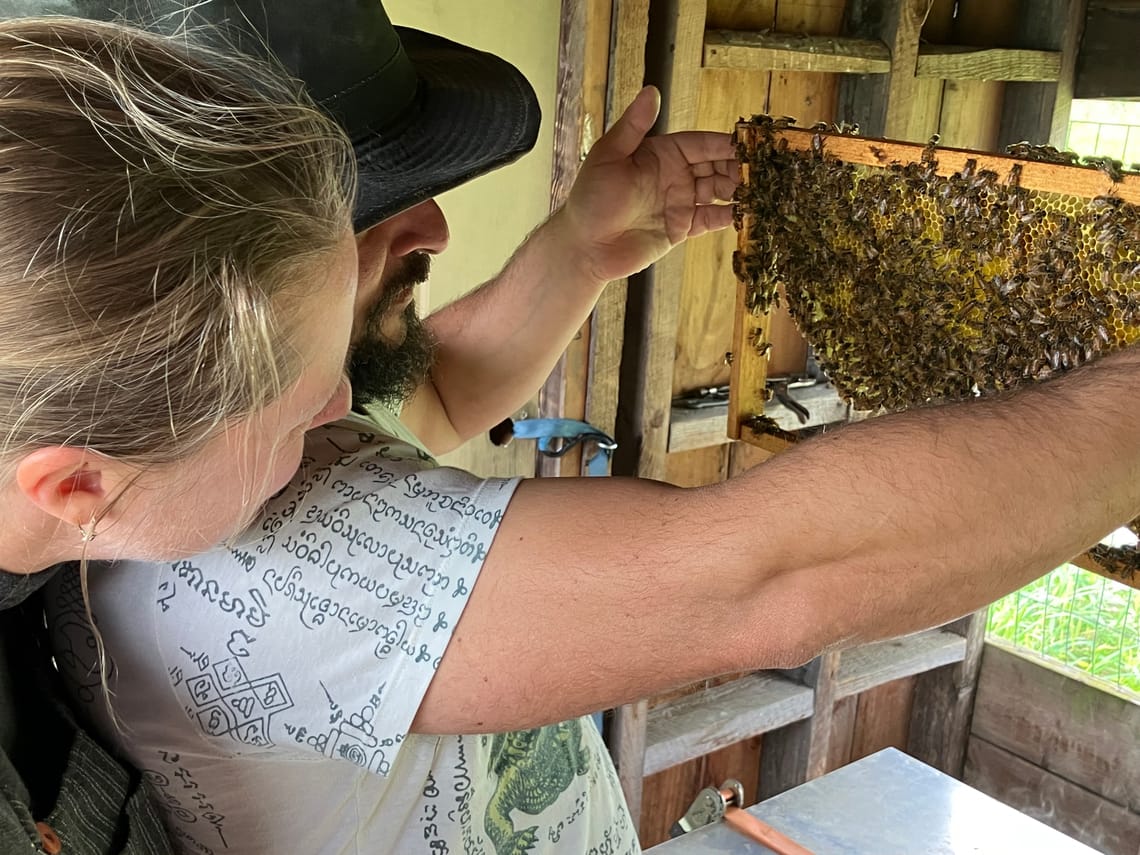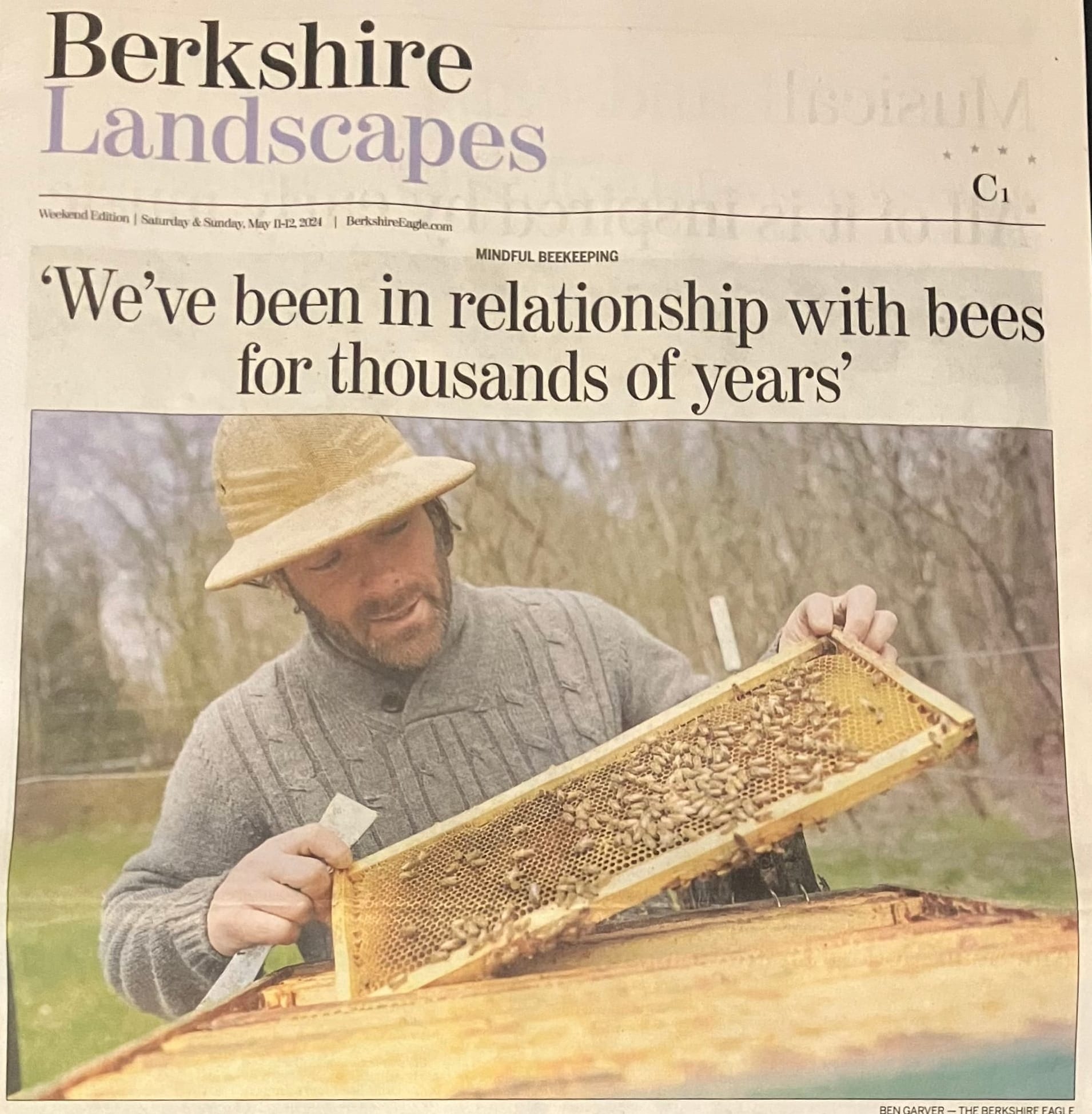
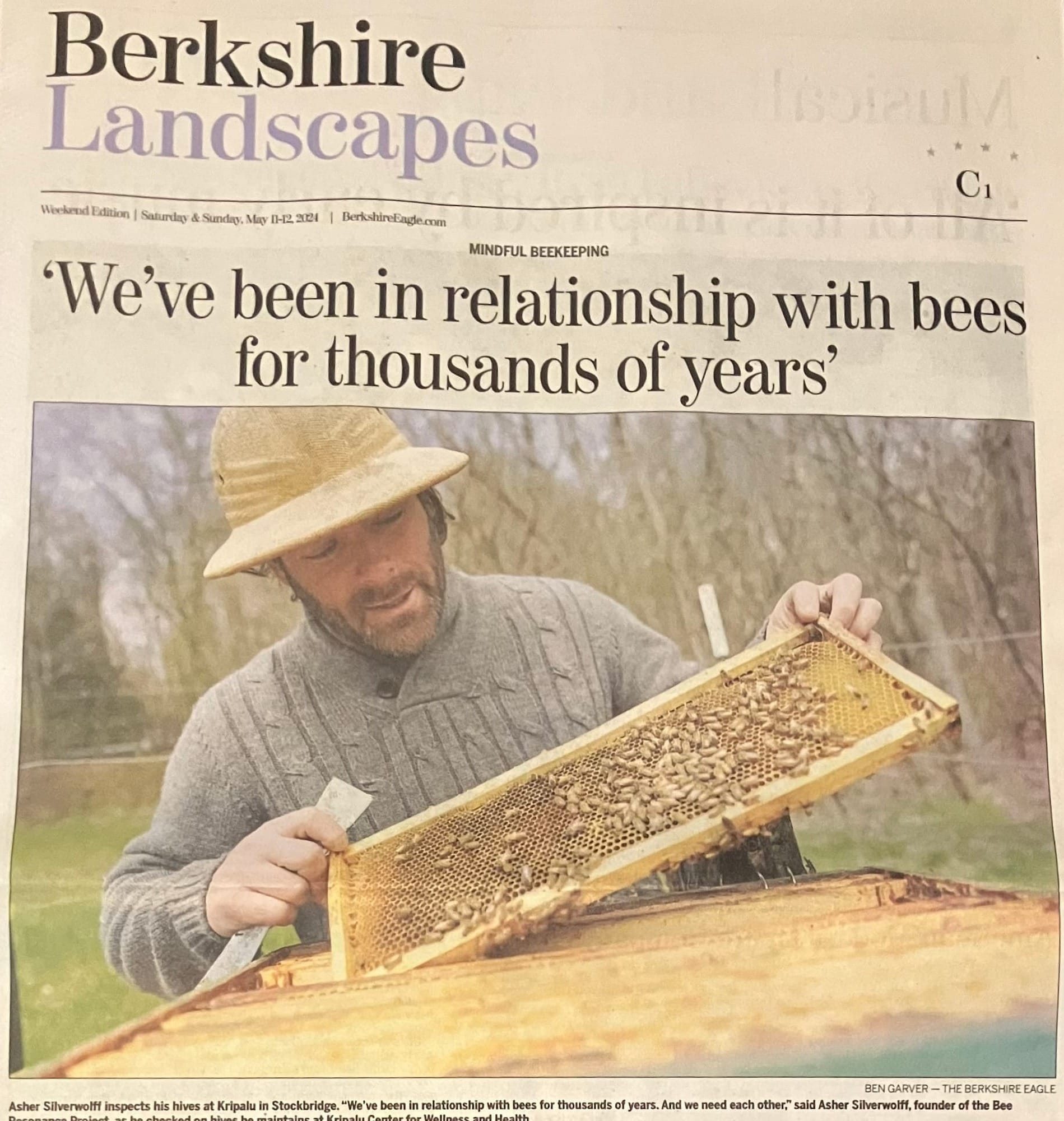
When beekeeper Asher Silver-wolff goes into a beehive, he doesn't wear a suit or veil. He's fully exposed to the bees. He's listening to them and, though they don't technically have ears, they might be listen-ing to him.
"Hey bees, it's Asher, I'm coming in, this is what I need to do today," he tells them on a Tuesday afternoon at Kripalu Center for Yoga and Health, approaching their hives with a smoker, pumping puffs in to let them know he's here. "I freaking love you and I appreciate you and I'm so grateful this is the work I get to do."
Silverwolff chats with the bees about his day, about his life at home.
"It helps me a lot. They're great listeners," he said. "Do they know who I am? I don't know. I'm learning."
MAINTAINING HIVES
Last year, Silverwolff founded beekeeping management company Bee Resonance Project, maintaining around 50 honey bee hives for private clients and larger organizations in the Berkshires and the Hudson Valley. Through the company, he also sells his own honey and teaches beekeeping workshops to school groups. But beekeeping is a continual learning process for Silverwolff himself, who before coming to Kripalu on this Tuesday- was stung on his forehead and chin.
"I puffed a little bit of smoke and opened a lid and a bee lit-erally flew right into my forehead. And that's a choice point. I can ignore that warning shot and keep pushing ahead with my agenda," he said, checking on his seventh beehive of the day behind the Stockbridge wellness center. "Or I can listen and say, 'okay, I'll give you some space.' This isn't ho-ho, hippy-dip-py. You can hear the vibrational sound and it's different when there's something going on."
Minutes earlier, he scanned the periphery of the woods looking for dried aromatic leaves, like mugwort or mountain mint, that he could put into the smoker.
"I put this narrow leaf goldenrod and it's going to smell really nice," he tells the bees, operating the smoker. "I want to do this nice thing for you so maybe we can have a nice time together."
There's different folklore on what pur-pose the smoker actually serves; bees may not have ears, but they do have highly sensitive noses on their feet.
"To me, it's the ritual," Silver-wolff said. "It's my entrypoint, the landing pad when I step out of ev-erything else going on."
Through his first career, as a chef in restaurants from Bangkok to Malay-sia, Silverwolff took bees for granted. His earliest bee memory is negative: tears streaming down his 3-year-old face as he showed his father the fresh sting on his foot.
That changed in 2013, during his first week working at urban farm Brooklyn Grange in New York City. Burned out from restaurant and kitch-en culture, he wanted to learn more about nature patterns and where food came from. He'd come to New York from Tel Aviv, where he'd worked at eco-farm Hava and Adam.
He remembers standing by the Brooklyn Grange's hives, overlooking the navel shipping yards and lower Manhattan, as beekeeper Megan Paska resplendent in bee tattoos - ex-plained the symbiosis of humans and bees.
RELATIONSHIP WITH BEES
"We've been in relationship with bees for thousands of years," he realized. "And we need each other." One-third of the food we eat fruits and vegetables and chocolate and coffee and nuts is dependent on hon-eybees' pollination, according to the U.S. Department of Agriculture. Beekeepers, like Paska, feared the loss of honeybees amidst environmental crisis."What do I want for my children, and my children's chil-dren? What kind of world do I want?" Silverwolff wondered. "And how can I foster that environment with healthy bees?"
From there, Silverwolff maintained beehives in New York City. Eventually, he wanted to learn how to steward land on a broader scale and left for farming apprenticeships around the world, from Mexico to New Zealand. In 2019, he landed at North Plain Farm in Great Barrington.
In the Berkshires farming community, he met Curtis Mraz, a fourth generation beekeeper. Mraz needed a hand with his beekeeping company, Smoke and Honey Co., and Silverwolff jumped at the opportunity.
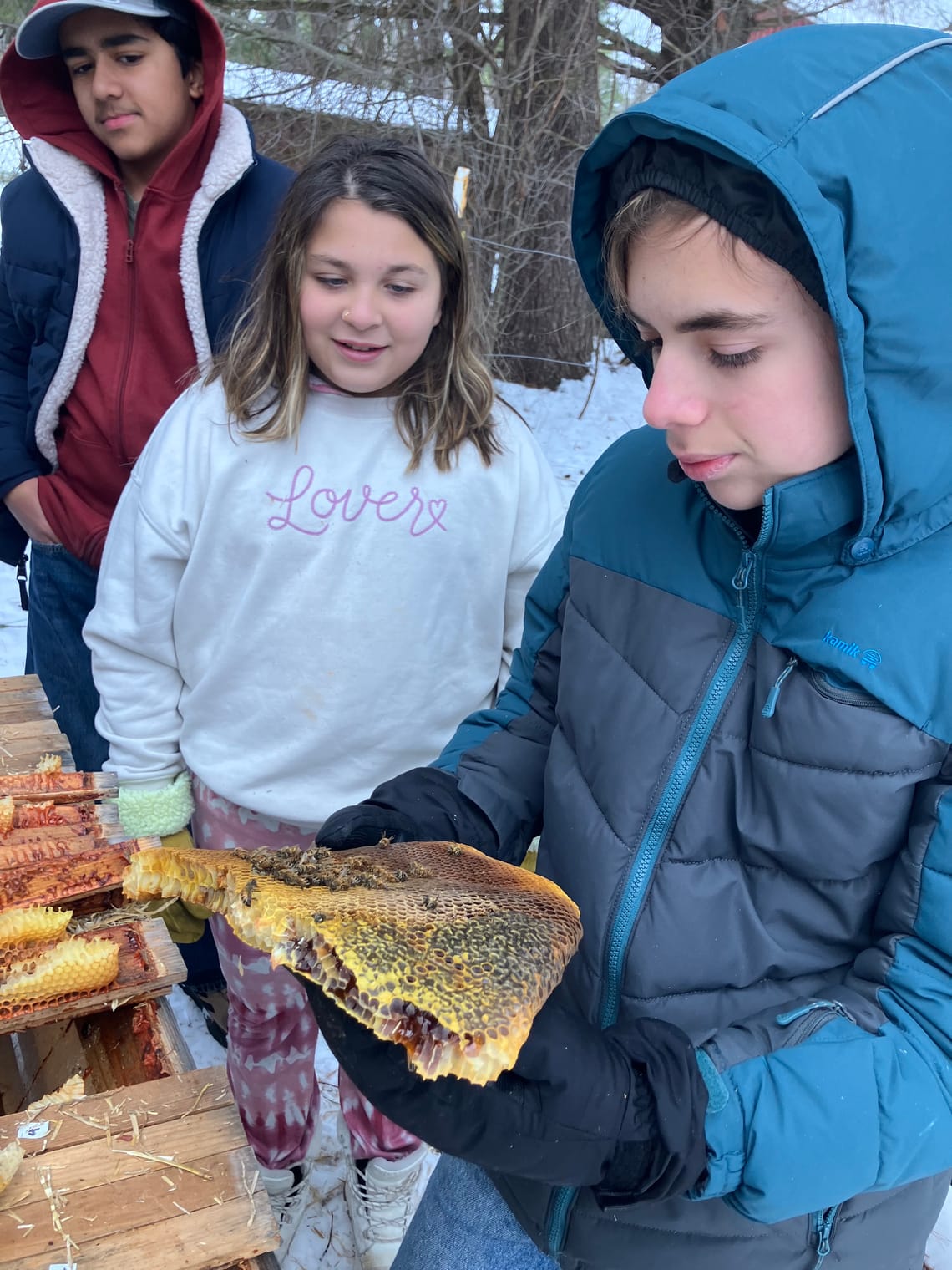
After a couple of years, when Mraz needed to take over his family's Cham-plain Valley Apiaries, in Vermont, Mraz asked Silverwolff if he would take over his clients. Silverwolff said yes and started his own com-pany, especially committed to going into schools and working with young people.
"The next chapter is about healthy bees and healthy beekeepers," Silverwolff said. "Being in relationship with bees in a way that's con-nective, caring and bee-centric, in a way of mindfulness and care and love and intentionality."
In recent months, extensive na-tional press has focused on the wide-spread health of honey bees after years of fearing decline. But Silverwolff dis-misses equating an increase in honey bee numbers with bee health.
BEE HEALTH
"Bees are more dependent on human intervention than ever before, so they're more prone to disease and significantly less resilient," he said. "So yes, on one hand, the bee numbers might be rising. I don't know if that's true, but the overall health and well-being of the bees is significantly lower. And that's where the work is: in cultivating practices that are less extractive and profit-driven, and more about cultivating healthy bees."
When he checks on a beehive, he's looking for its health. "Is the queen healthy? Is she strong? Is she dead? Is the hive about to swarm and find a new home? You can see the patterns of how the queen has laid her eggs, whether she's healthy and young and vital or old and sick," Silverwolff said.
Around him at Kripalu, where he also teaches a Mindful Beekeeping course, dandelions have popped and apple blos-soms are starting to appear on a nearby tree. After a cold and wet early spring, Silverwolff sees these signs of the weather turning as an indicator that the bees are preparing to breed.
Micah Mortali, who leads Kripalu's School of Mindful Outdoor Leadership, walks up the hill, approaching Silver-wolff to say hello. "They're happy bees in here!" Mortali says, approaching with a grin. Silverwolff clocks his friend, waves, eyes the hives and re-sponds, "May they go forth and grow."
Aaron Simon Gross can be reached at agross@berkshireeagle.com or 561-445-2371.